What Brello 1.0 does
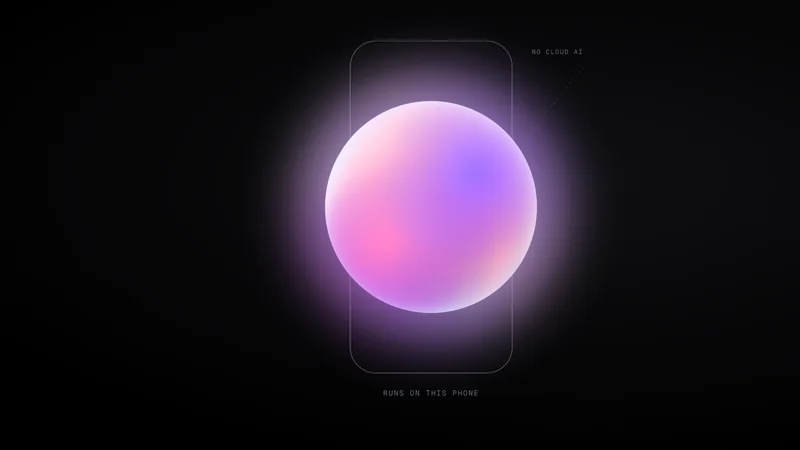
Brello 1.0 is a private AI assistant for Android and iPhone, made by Stuvio, that runs its language models entirely on the phone. Version 1.0.0 (build 1) was built on 4 October 2026, and on 5 October 2026 we published its full description: the product page, the system card and a model card for each of its three models. It is on Google Play and the App Store.
You can ask it questions and show it photos. It needs no account, and after a one-time model download of 977 MB to 3.66 GB it works offline. With Think harder turned on, the model reasons before it answers and shows its reasoning in a ‘Thought process’ panel, and an answer can run to 2,048 tokens instead of 1,200.
Brello Pro and Brello Vision understand photos taken with the camera or chosen from the gallery, one photo per message. A message with a photo never triggers a web search.
Web search is optional and off by default. With it off, a question that looks time-sensitive brings up a card titled ‘Search the web for this?’, with two buttons, ‘Search the web’ and ‘Answer offline’; choosing to search turns web search on. Answers that use the web cite their sources inline as [1] and [2], with source cards above the answer. ‘Answering from the open web, without a server’ describes how the search, reading and ranking work.
Three models, matched to phone memory
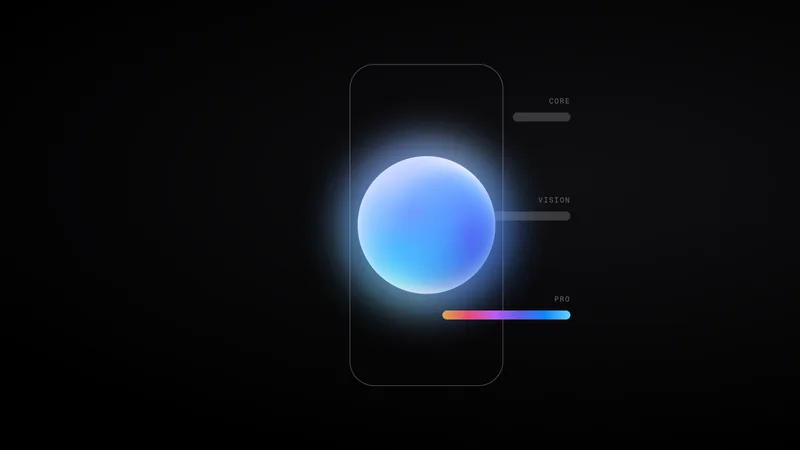
Brello 1.0 offers three models, each based on an open model released under Apache 2.0 and run on the phone with Google’s LiteRT-LM runtime, on the GPU with a fallback to the CPU. Table 1 lists them.
| Model | Based on | Input | Download | Storage in use | Recommended RAM |
|---|---|---|---|---|---|
| Brello Pro | Gemma 4 E4B, by Google | Text and photos | 3.66 GB | ≈6.26 GB | 12 GB |
| Brello Vision | Gemma 4 E2B, by Google | Text and photos | 2.59 GB | ≈3.60 GB | 6 GB |
| Brello Core | Qwen3 1.7B, by Alibaba | Text | 977 MB | ≈1.95 GB | 4 GB |
Brello recommends the most capable model that fits the phone. Because phones report a little less memory than they advertise, a model counts as a fit when the phone reports at least 0.9 times its recommended RAM, so a phone with 8 GB of RAM is offered Brello Vision. Every model has a context window of 4,096 tokens. ‘Fitting a model to the phone in your pocket’ explains the recommendation, the storage check and recovery from failed loads.
Brello is not affiliated with or endorsed by Google or Alibaba.
What stays on the phone, and what leaves it
Your questions, photos and answers are processed on the phone, and there is no Brello server, so none of them is sent to us. Two kinds of request leave the phone, and only when you start them.
- Model downloads. Each model is downloaded once, as a standard file download from Hugging Face, with no account or token.
- Web search, when you use it. The search text goes directly from the phone to a search engine (DuckDuckGo, Bing, Brave Search, Google News or Wikipedia), and the phone requests up to four result pages from the websites themselves. They see the request and the phone’s IP address, as they would for any web request. The model that reads the pages and writes the answer still runs on the phone.
Chats are stored in a single file in Brello’s private app storage, and are excluded from Android cloud backups and from device-to-device transfer. The app contains no analytics, crash-reporting or advertising software. How Brello handles your questions, photos and answers sets out each data flow, and the Brello 1.0 system card documents them for reviewers.
Known limitations of Brello 1.0
Brello 1.0 is a prototype, and it has the limits of a small model running on a phone.
- Its models are far smaller than frontier cloud models. They can be wrong, have a knowledge cutoff and are weaker at long or complex reasoning. The system prompt tells the model to say when it is not sure, but an instruction is not a guarantee.
- Each answer draws on only the last six messages of a chat, so long chats lose their early detail.
- It takes one photo per message and no PDFs or other files, has no voice input or output, and its interface is in English only.
- The first launch of each model takes up to a minute while it optimises for the phone’s chip.
- Web search depends on third-party search engines. Each attempt can take up to about 14 seconds or come back empty, and Brello then answers from what its model already knows.
- There is no sync, backup or export. If the phone is lost or reset, its chats are gone.
- It runs only on 64-bit ARM (arm64-v8a) phones with Android 8.0 or newer. Some phones lack the memory or storage for Brello Pro, which is recommended for phones with 12 GB of RAM and needs about 6.56 GB of free space before it downloads.
Status and availability
Brello 1.0 is version 1.0.0 (build 1), built on 4 October 2026. It is on Google Play for Android and the App Store for iPhone.
We haven’t announced pricing. If that changes, we will announce it in News, with the date.
Brello 1.0 is separate from Brello Super Intelligence, which is in development and is described in ‘Introducing Brello Super Intelligence’. Brello 1.0 already runs two of the three layers Brello SI is being designed around: the device, and the open web only on request.
Version history
- First published.